
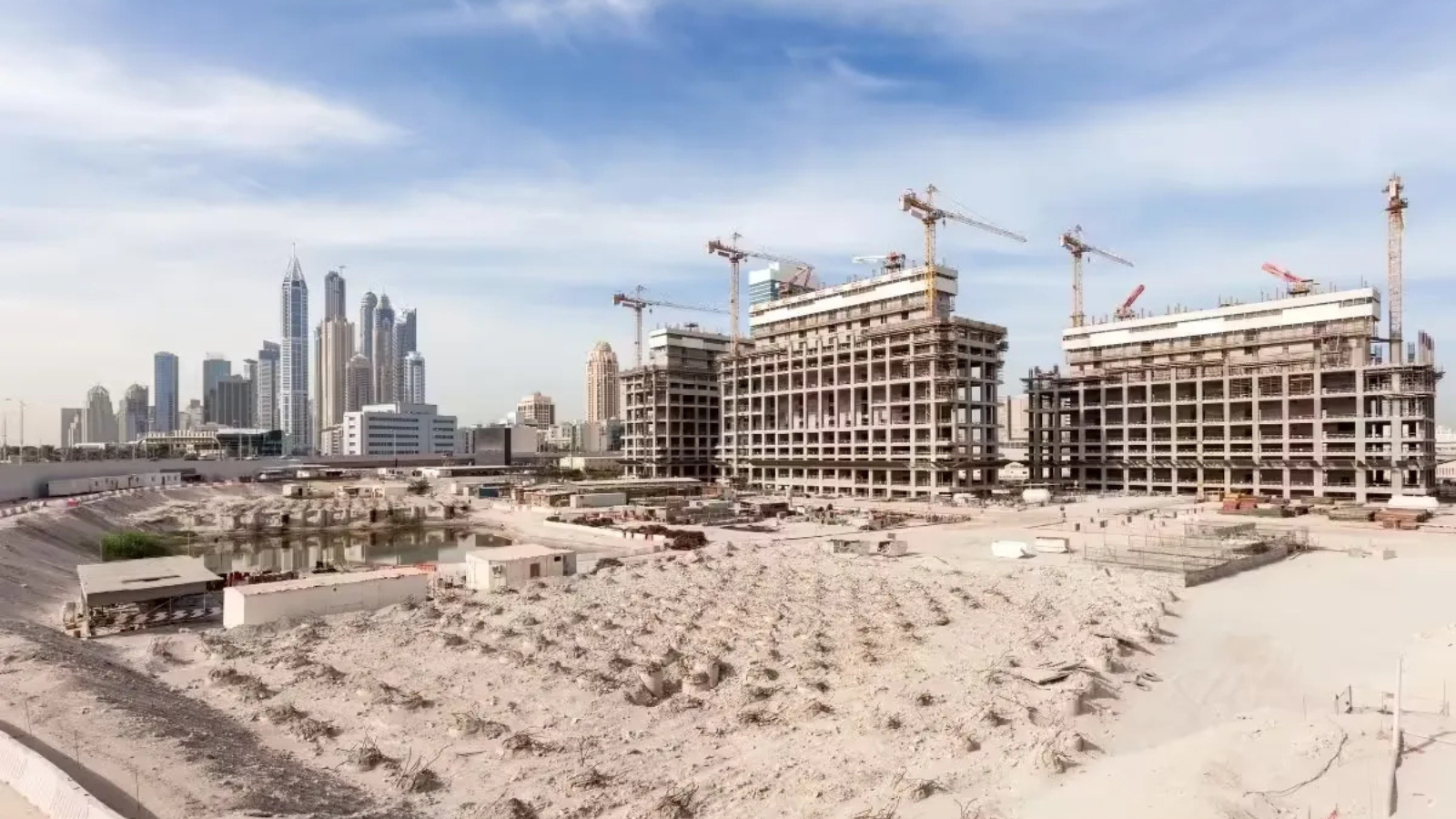
Dubai’s residential real estate market maintained strong activity in April 2026, recording AED 37.38 billion in total residential sales across 13,062 transactions. Off-plan activity remained the dominant force, accounting for 76.48% of total residential sales volume and AED 28.55 billion in transaction value. These figures show that Dubai’s primary market continues to play a central role in shaping investor behaviour and overall market momentum.
This matters because off-plan is no longer simply a niche segment for early investors. It has become one of the most important mechanisms through which Dubai absorbs population growth, expands its residential footprint and attracts international capital. For many buyers, off-plan represents access, flexibility and exposure to the future growth of the city.
However, high off-plan activity also requires a more disciplined approach. As more launches enter the market, investors need to look beyond marketing, payment plans and launch hype. The key question is not whether off-plan is active. The key question is which projects are positioned to perform once delivered.
Key market takeaways
- Dubai recorded AED 37.38 billion in residential sales in April 2026.
- Residential transaction volume reached 13,062 deals during the month.
- Off-plan transactions accounted for 76.48% of total residential sales volume.
- Off-plan transaction value reached AED 28.55 billion.
- The market remains active, but investors should become more selective as supply expands.
Why Off-Plan Continues to Lead Dubai’s Market
Off-plan property continues to lead Dubai’s market because it offers a combination of accessibility, flexibility and future upside. Buyers can secure property with staged payments, often over several years, which makes capital deployment easier compared with purchasing ready property outright.
This structure is particularly attractive to international investors who may be managing funds across different currencies and markets. Instead of committing the full purchase price immediately, they can enter Dubai’s market through a phased payment schedule and benefit from potential appreciation during the construction cycle.
For end-users, off-plan can also provide access to newer communities, modern layouts and amenity-led developments that are designed around today’s lifestyle expectations. This is especially relevant in master communities where infrastructure, schools, retail and leisure components are planned as part of the long-term ecosystem.

Payment Plans Are a Major Driver — But Not the Whole Story
Payment plans remain one of the biggest drivers behind off-plan activity. They allow buyers to enter with a lower initial commitment and manage payments throughout the construction period. This can be a powerful advantage, especially for investors who want exposure to Dubai without deploying all capital at once.
But a flexible payment plan should never be the only reason to buy. A good payment plan attached to a weak project can still lead to poor performance. Investors need to assess whether the project makes sense beyond the sales structure.
The real analysis should include developer track record, launch pricing, location fundamentals, expected supply in the area, service charges, likely rental demand and realistic resale prospects. In a market with strong off-plan volume, selectivity becomes the difference between smart investing and speculative buying.
What the Secondary Market Still Tells Us
While off-plan dominated April’s residential activity, the secondary market remains equally important from an investor perspective. Ready property transactions provide evidence of actual end-user demand, rental performance and liquidity in completed communities.
Investors should use the secondary market as a benchmark. If an off-plan project is priced significantly above completed stock nearby, the buyer must understand why. Is the project offering superior design, better amenities, stronger branding or a better location? Or is the premium simply launch momentum?
The strongest off-plan investments are usually those that make sense when compared against today’s ready market and tomorrow’s expected supply. Without that comparison, buyers risk overpaying for future value that may already be priced in.
“Off-plan remains powerful in Dubai because it combines access, flexibility and future positioning. But the strongest investors are not buying payment plans — they are buying the right locations, developers and long-term fundamentals.”
Investor Confidence Remains Visible
April’s numbers show that investor confidence remains present. Despite a more measured global investment environment, buyers continue to allocate capital into Dubai real estate. This is partly due to Dubai’s wider strengths: tax efficiency, safety, infrastructure, global connectivity, population growth and residency-linked appeal.
Dubai has also become increasingly attractive to buyers looking for portfolio diversification. For many international investors, the city offers a combination of rental income potential, lifestyle appeal and long-term strategic positioning that is difficult to find in many traditional markets.
The continued dominance of off-plan activity suggests buyers are still confident in Dubai’s future growth. But confidence does not remove the need for discipline. As the market matures, investors must move from simply “buying Dubai” to buying the right asset within Dubai.
Where Opportunity Exists
Opportunity exists where price, location, product and future demand align. The best off-plan investments are rarely about chasing the loudest launch. They are about identifying projects that will still make sense at handover.
Investors should pay attention to communities supported by genuine infrastructure, strong access routes, credible developers and realistic population growth. Projects with clear lifestyle appeal, good layouts and sensible pricing are more likely to hold demand beyond the launch phase.
Buyers should also consider exit strategy from the beginning. Will the property be rented after handover? Sold before completion? Held for long-term appreciation? Used personally? Each strategy requires a different type of product and location.
Risks Buyers Should Not Ignore
Off-plan is attractive, but it is not risk-free. Construction delays, oversupply in certain submarkets, unrealistic rental projections and weak resale demand can all affect investor outcomes.
Buyers should also be careful with projects where the payment plan appears attractive but the underlying price is inflated. A flexible payment schedule can sometimes distract from weak fundamentals.
The best protection is due diligence. Investors should understand the developer’s history, escrow structure, delivery timeline, comparable pricing and future supply pipeline before committing.
My Perspective
Dubai’s April 2026 figures show a market that remains active, liquid and confident. Off-plan continues to anchor activity because it offers accessibility, flexible payment structures and exposure to Dubai’s future growth.
But the next phase of the market will reward selectivity. Investors need to understand what they are buying, why it should perform and how it will compare to competing supply at handover.
For serious buyers, Dubai remains highly compelling. But the winning strategy is no longer simply to buy early. It is to buy intelligently.
FAQs: Dubai Off-Plan Market April 2026
Why is off-plan property so dominant in Dubai?
Off-plan property remains dominant because it offers flexible payment plans, access to new communities, modern product design and potential capital appreciation before completion.
Is off-plan better than ready property?
Not always. Off-plan offers flexibility and future upside, while ready property offers immediate rental income, occupancy and clearer visibility on the finished product. The right choice depends on the buyer’s objective.
What should investors check before buying off-plan?
Investors should review the developer’s track record, launch price, payment plan, location fundamentals, handover timeline, service charges, supply pipeline and comparable ready property prices.
Does high off-plan activity create risk?
High off-plan activity does not automatically create risk, but it does mean investors need to be selective. Not every launch will perform equally, especially as more supply enters the market.
Who is off-plan best suited for?
Off-plan can suit medium to long-term investors, buyers seeking payment flexibility and those targeting future growth communities. It may be less suitable for buyers who need immediate occupancy or immediate rental income.
Considering an off-plan investment in Dubai?
If you want to understand which projects are worth considering, how payment plans really compare and where long-term value exists, I can help you approach the market with a clearer strategy.