Dubai’s Dh1.5 Billion Stimulus Package: What It Means for Businesses, Residents and Investors
Dubai has introduced a targeted Dh1.5 billion stimulus package designed to reduce operating costs, support key sectors and reinforce the emirate’s position as one of the world’s most responsive business environments.

Dubai’s latest Dh1.5 billion stimulus package is more than a set of temporary cost reductions. It is a strategic signal. At a time when businesses globally are facing pressure from rising costs, tighter liquidity, supply-chain disruption and shifting consumer behaviour, Dubai is once again demonstrating its ability to act quickly and protect economic momentum.
The package introduces targeted relief across hospitality, tourism, events, education, customs, licensing, government contracts and small business support. For residents, the impact may not always appear directly as a cheque or subsidy, but the indirect effect can be meaningful: stronger business continuity, reduced pressure on service providers and more stability across sectors that shape daily life in Dubai.
From an investor perspective, this matters because Dubai’s long-term appeal is not built only on infrastructure or tax efficiency. It is also built on policy agility. When authorities move quickly to support sectors under pressure, confidence improves — and confidence is one of the most important currencies in any economy.
Key areas supported by the stimulus package
- Hospitality and restaurants benefit from reduced recurring government fees.
- Event organisers receive relief on permit, postponement and cancellation fees.
- Holiday home operators benefit from certain permit and licence fee relief.
- SMEs receive additional time and lower administrative pressure.
- Private schools, nurseries and early childhood centres receive fee and rent-related support.
- Government contractors benefit from improved cash-flow conditions.
- Importers and traders receive customs payment flexibility and fine reductions.
Why This Package Matters
Dubai has always positioned itself as a city that listens to business. That matters because economies are not only driven by growth plans — they are driven by the ability to respond when conditions change. The latest stimulus package shows a practical understanding of where cost pressure is being felt.
Hospitality, tourism, events, education and trade are all deeply connected to Dubai’s wider economic engine. If these sectors face rising costs, the impact does not remain isolated. It can flow into pricing, hiring, investment decisions and consumer confidence.
By reducing costs and easing payment obligations in targeted areas, Dubai is giving businesses breathing room. That breathing room can help companies maintain service quality, protect employment, continue investment and avoid passing every cost increase directly to consumers.
Hospitality and Restaurants Receive Direct Relief
One of the most visible areas of support is hospitality. Hotels and restaurants are central to Dubai’s global identity, tourism economy and lifestyle offering. By reducing municipal fee pressure and suspending certain tourism-related collections during the incentive period, the government is directly supporting one of the emirate’s most important sectors.
This is important because hospitality businesses operate with recurring costs that affect margins daily. Even a temporary reduction in government fees can improve liquidity, protect profitability and give operators more flexibility in pricing, staffing and reinvestment.
For residents and visitors, the benefit may appear indirectly. A stronger hospitality sector supports jobs, events, dining, entertainment and Dubai’s wider reputation as a global lifestyle destination.
Events and Conferences Get More Flexibility
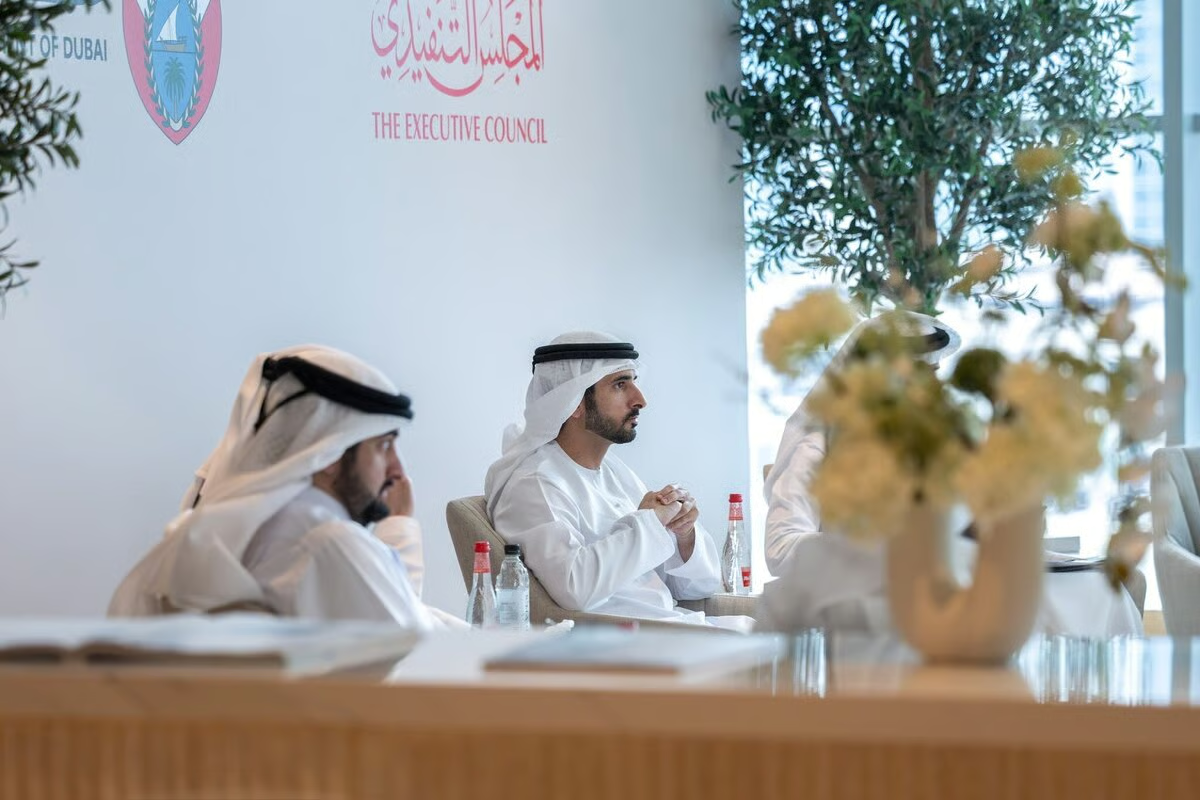
Dubai’s events, exhibitions, conference and sporting sectors are also supported through waived permit, postponement and cancellation fees. This lowers financial risk for organisers and encourages event activity to continue even during uncertain periods.
That matters because events are not just entertainment. They support hotels, restaurants, transport, retail, tourism, media, logistics and business networking. Every major event creates a wider economic ripple effect across the city.
Reducing the cost and risk of organising events helps keep Dubai active, visible and commercially relevant. It also strengthens the city’s positioning as a global meetings and events hub.
Holiday Homes and Short-Term Rentals Benefit
Holiday home operators are another important part of Dubai’s tourism and real estate ecosystem. Licence and permit relief gives operators more flexibility at a time when short-term rental demand can shift with seasonality, travel patterns and global economic sentiment.
For property investors, this is worth watching. Dubai’s short-term rental market has become a major part of the city’s residential investment story, particularly in areas popular with tourists, business travellers and remote professionals.
Support for holiday home operators helps maintain Dubai’s accommodation diversity, giving visitors more choice while supporting investors who rely on short-term rental income.
“Dubai’s strength is not just in building fast. It is in responding fast. This stimulus package shows why the emirate continues to attract capital, entrepreneurs and long-term residents.”
Hassan Waqar
Support for SMEs and Entrepreneurs
Small businesses are often the most sensitive to cash-flow pressure. Even modest changes in licensing costs, renewal timelines or administrative obligations can affect hiring, expansion and survival.
By giving eligible businesses more time around memberships and renewals, Dubai is reducing near-term pressure on entrepreneurs and smaller companies. This is important because SMEs play a vital role in innovation, employment and economic diversity.
For Dubai to remain competitive, it must continue to support not only major corporations and global investors, but also founders, operators and smaller businesses that form the everyday backbone of the economy.
Education Providers Receive Important Relief
Private schools, nurseries and early childhood centres are also included in the support measures. Fee deferrals, instalment plans, fine relief and rent-related support can help education providers manage operating costs more effectively.
This is significant because education is directly linked to Dubai’s ability to attract and retain families. For professionals, entrepreneurs and investors considering long-term relocation, school quality and stability are major decision factors.
A more supported education sector strengthens Dubai’s residential appeal. It also helps families feel more confident about building a long-term life in the city.
Customs Relief Supports Trade and Logistics
Dubai’s role as a trade and logistics hub is also reflected in the package. Instalment options for customs dues and significant reductions in customs-related fines can help importers manage liquidity and reduce liabilities.
This is important because trade is one of Dubai’s core economic strengths. When importers and logistics firms face lower short-term financial pressure, goods can continue moving efficiently through the market.
For consumers, the benefits can be indirect but relevant. A healthier trading environment can support supply stability, pricing flexibility and continued retail activity.
Government Contractors Gain Cash-Flow Support
The reduction of final retention security requirements for certain government supply contracts is another practical measure. Retention security can tie up cash that contractors and suppliers need for operations, staffing and delivery.
Lowering this requirement improves liquidity for companies working on government projects. This can help contractors manage working capital more effectively and support continuity across public-sector supply chains.
In a city where infrastructure and government-linked development remain important economic drivers, improving contractor cash flow helps protect project momentum.
What This Means for Residents
Residents may not always feel the package immediately in a direct way, but the long-term effect matters. When businesses have lower cost pressure, they are better positioned to maintain services, protect jobs and manage pricing.
Support for hospitality, schools, nurseries, SMEs, events and trade all contributes to the overall stability of life in Dubai. A resilient business environment supports resident confidence because employment, services and lifestyle sectors remain active.
For anyone living in Dubai, the message is clear: the government is continuing to manage the economy proactively, not reactively.
What This Means for Real Estate and Investment
From a real estate perspective, economic confidence is closely tied to property confidence. When businesses feel supported, hiring improves, relocation remains attractive and long-term residents are more likely to commit to the city.
Dubai’s property market benefits from a broader ecosystem: tourism, trade, education, business formation, events, logistics and hospitality. Measures that support these sectors indirectly support real estate demand by strengthening the reasons people live, work and invest in Dubai.
This is why stimulus packages matter to property investors. They are not only about short-term cost relief. They help preserve the economic base that supports rental demand, population growth and long-term confidence.
My Perspective
Dubai’s Dh1.5 billion stimulus package is a reminder that the emirate’s biggest advantage is not only ambition — it is execution. The ability to identify pressure points and respond quickly is one of the reasons Dubai continues to attract entrepreneurs, residents and global capital.
For businesses, the package creates breathing room. For residents, it supports stability. For investors, it reinforces Dubai’s long-term credibility as a market that understands the importance of confidence.
In a world where many cities are slow to adapt, Dubai’s responsiveness remains one of its strongest competitive advantages.
FAQs: Dubai Dh1.5 Billion Stimulus Package
What is Dubai’s Dh1.5 billion stimulus package?
It is a targeted economic support package designed to reduce costs and improve cash flow for businesses across sectors including hospitality, events, education, trade, customs, SMEs and government contracting.
Which sectors benefit the most?
Key beneficiaries include hotels, restaurants, event organisers, holiday home operators, SMEs, private schools, nurseries, importers, traders and companies working with government contracts.
How does this help residents?
Residents benefit indirectly through stronger business continuity, reduced pressure on service providers, more stable employment conditions and continued activity across lifestyle, education, tourism and retail sectors.
Why does this matter for investors?
Investors watch policy responsiveness closely. A government that acts quickly to support business confidence helps strengthen long-term investor trust in the market.
Does this impact Dubai real estate?
Yes, indirectly. Real estate demand depends on business confidence, population growth, employment, tourism, education and lifestyle sectors. Supporting these areas helps protect the wider property ecosystem.
Is this a sign Dubai’s economy is weak?
Not necessarily. Stimulus does not always mean weakness. In Dubai’s case, it reflects proactive economic management designed to preserve momentum and reduce pressure before it becomes more serious.
Want to understand how Dubai’s economy affects property investment?
If you are assessing Dubai from an investment, relocation or business perspective, I can help you understand how policy, real estate and long-term opportunity connect.
Book a Consultation
Share your details below and I’ll personally get back to you to discuss Dubai property, investment opportunities or relocation strategy.