
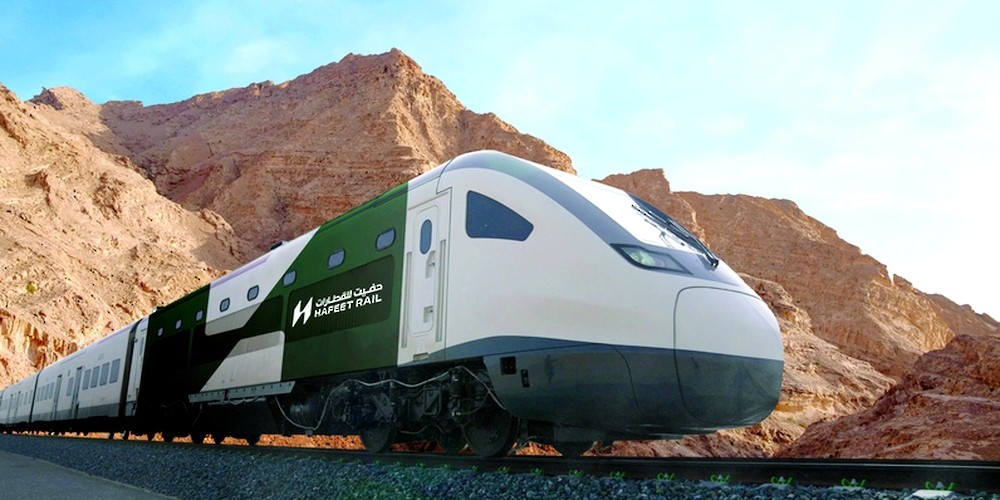
Infrastructure rarely changes a property market overnight. Its influence tends to build gradually as businesses relocate, employment centres expand, travel becomes easier and previously less-connected locations become more commercially viable.
That is why the progress of the UAE–Oman rail link is worth watching from a real estate perspective. Trial operations on the Hafeet Rail project are expected to begin in Q4 2027, creating a new cross-border rail connection between Oman and the UAE.
The 238-kilometre network will connect Sohar in Oman with the UAE's national railway network through Al Buraimi and Al Ain. The project is being developed by Hafeet Rail, a joint venture involving Etihad Rail, Oman Rail and Mubadala Investment Company.
The key point for investors: the significance of Hafeet Rail is not simply that it will make travel between Oman and the UAE easier. It adds another layer of regional connectivity linking population centres, industrial areas, ports and the wider UAE rail network.
What Is the UAE–Oman Rail Link?
Hafeet Rail is being developed as a cross-border passenger and freight railway connecting Oman with the UAE's national rail network.
The route will connect Sohar, Al Buraimi and Al Ain, providing a new transport corridor between the two countries. Sohar is particularly important because of its port and industrial infrastructure, while Al Ain represents a strategically important population and economic centre on the UAE side.
The project is designed to support both passenger and freight movement. That distinction is important because its potential economic impact extends beyond tourism and commuting into trade, logistics, industrial activity and supply chains.
“The real opportunity is not simply the railway itself. It is the economic activity that better connectivity can enable around it.”
When Will the Oman–UAE Railway Start?
Trial operations are currently expected to begin in the fourth quarter of 2027, according to Oman's Minister of Transport, Communications and Information Technology.
This is an important milestone, but it should not be confused with a fully mature operating network. Trial operations are part of the testing and commissioning process, and the wider commercial impact will depend on the eventual operating schedule, passenger services, freight volumes and integration with the UAE and Omani networks.
Construction had reached approximately 40% completion by April 2026, with work continuing across areas including Sohar, Wadi Al Jizzi, Al Buraimi and Al Ain.
How Fast Will the UAE–Oman Train Be?
Passenger trains are expected to reach speeds of up to 200 kilometres per hour. Previous project plans have indicated a journey time of around 100 minutes between Sohar and Abu Dhabi and approximately 47 minutes between Sohar and Al Ain.
Freight trains are expected to operate at speeds of up to 120 kilometres per hour. This is particularly relevant to the economic side of the project because the railway is intended to provide a more efficient connection between Sohar's port and industrial infrastructure and the UAE rail network.
| Factor | What It Means |
|---|---|
| Route | Sohar – Al Buraimi – Al Ain – UAE rail network |
| Network length | Approximately 238 km |
| Trial operations | Expected Q4 2027 |
| Passenger speed | Up to 200 km/h |
| Freight speed | Up to 120 km/h |
| Primary role | Passenger connectivity, freight, logistics and regional trade |
Could Hafeet Rail Affect Property Markets?
Transport infrastructure can influence real estate markets, but the relationship is rarely as simple as saying that a railway automatically makes nearby property more valuable.
The more useful question for an investor is whether improved connectivity changes the underlying economics of a location.
If a new rail connection makes it easier for people to access employment centres, businesses to move goods, companies to reach ports and tourists to travel between destinations, it can contribute to wider economic activity.
Over time, that can affect demand for residential, hospitality, retail, logistics and commercial real estate.
Four Things Property Investors Should Watch
Connectivity
Locations that gain meaningful access to major employment centres, transport networks, ports or population hubs can become more attractive over time.
Employment & Economic Activity
Infrastructure becomes more significant when it supports new business activity, industrial investment and employment rather than functioning purely as a transport project.
Development Patterns
Investors should monitor new masterplans, commercial districts, hospitality projects and residential developments around strategically connected areas.
Timing
Infrastructure investment is generally a long-term story. Buying solely because a railway is being built can be speculative; understanding when the surrounding market is likely to benefit is more important.
What Could This Mean for Dubai?
For Dubai investors, the immediate impact of the Oman–UAE railway should not be overstated. The Hafeet Rail route does not run through Dubai itself.
Its significance is broader. The project forms part of the UAE's growing national rail infrastructure and strengthens the country's connection to neighbouring markets.
Dubai already benefits from its position as a regional centre for business, finance, tourism, aviation and logistics. Additional rail connectivity across the UAE and into neighbouring countries can reinforce that wider ecosystem.
From a property perspective, this means investors should consider connectivity as one component of a wider investment thesis rather than treating the railway as a standalone reason to buy.
Why Al Ain and the UAE–Oman Corridor Deserve Attention
Al Ain is one of the locations that deserves particular attention because it sits directly within the emerging cross-border corridor.
The city already has an established population, economic base and strategic position close to the Oman border. Improved rail connectivity could strengthen its role as a link between the UAE and Oman.
That does not mean every property in Al Ain will benefit equally. Investors still need to assess the specific location, development quality, supply, rental demand, infrastructure and exit liquidity.
The same principle applies on the Omani side. Sohar's existing port and industrial base gives the rail connection an economic foundation that goes beyond residential property.
The Bigger Gulf Investment Story
One of the most interesting aspects of the UAE–Oman railway is how it fits into the wider transformation of Gulf infrastructure.
The GCC is investing heavily in transport, logistics, tourism, ports, airports and urban development. These projects are increasingly interconnected rather than being developed in isolation.
For international property investors, that matters because real estate is ultimately influenced by the movement of people, capital, businesses and jobs.
Better infrastructure can strengthen those flows. The challenge for investors is identifying which locations are likely to capture the resulting economic activity before expectations become fully priced into the market.
What Investors Should Not Do
Infrastructure announcements can generate significant excitement in property markets. But investors should avoid buying purely on the basis of a future railway station, road or transport connection.
A strong investment requires several factors to align: sustainable demand, sensible pricing, appropriate rental economics, quality development, infrastructure, employment drivers and a realistic exit strategy.
Connectivity is a catalyst, not an investment thesis on its own. The strongest opportunities are usually found where infrastructure improvement coincides with genuine economic and population growth.
What Happens Next?
The next major milestone for Hafeet Rail is the planned start of trial operations in Q4 2027.
Between now and then, investors should watch construction progress, station and route details, operating plans, commercial freight commitments and the development activity emerging around the corridor.
As the project moves closer to operation, the market should gain a clearer understanding of how the railway will affect travel, logistics and economic activity between Oman and the UAE.
UAE–Oman Rail Link: Frequently Asked Questions
When will the UAE–Oman railway begin operations?
Trial operations are currently expected to begin in the fourth quarter of 2027. Full commercial operations will depend on the completion of testing, commissioning and the final operating programme.
What is Hafeet Rail?
Hafeet Rail is the joint venture developing the cross-border railway between Oman and the UAE. It involves Etihad Rail, Oman Rail and Mubadala Investment Company.
How long is the UAE–Oman rail link?
The Hafeet Rail network is approximately 238 kilometres long and will connect Sohar in Oman with the UAE's national railway network through Al Buraimi and Al Ain.
How fast will the UAE–Oman train travel?
Passenger trains are expected to reach speeds of up to 200 kilometres per hour, while freight trains are expected to operate at up to 120 kilometres per hour.
Could the UAE–Oman railway affect property prices?
Potentially, but the impact will vary by location. Improved connectivity can support economic activity and demand, but investors should evaluate employment, population growth, supply, rental demand, pricing and other fundamentals alongside infrastructure.
Is the railway relevant to Dubai property investors?
Yes, as part of the UAE's broader connectivity and infrastructure strategy. However, the railway does not directly run through Dubai, so investors should consider its regional economic implications rather than treating it as a direct Dubai property catalyst.
Looking Beyond the Headlines?
Infrastructure can create opportunities, but identifying the right property requires more than following the latest announcement. If you are considering an investment in Dubai or the wider GCC, Hassan can help you assess the numbers, location, demand drivers and long-term investment case.