
Abu Dhabi Branded Residences: 26 New Projects and What Investors Need to Know
Abu Dhabi is emerging as one of the world's most significant markets for branded residences. With 26 projects in the development pipeline and a growing mix of international hospitality, fashion and lifestyle brands, the capital is expanding its position in the global luxury residential market. For investors, the opportunity is substantial — but the investment case requires more than a recognised name on a building.
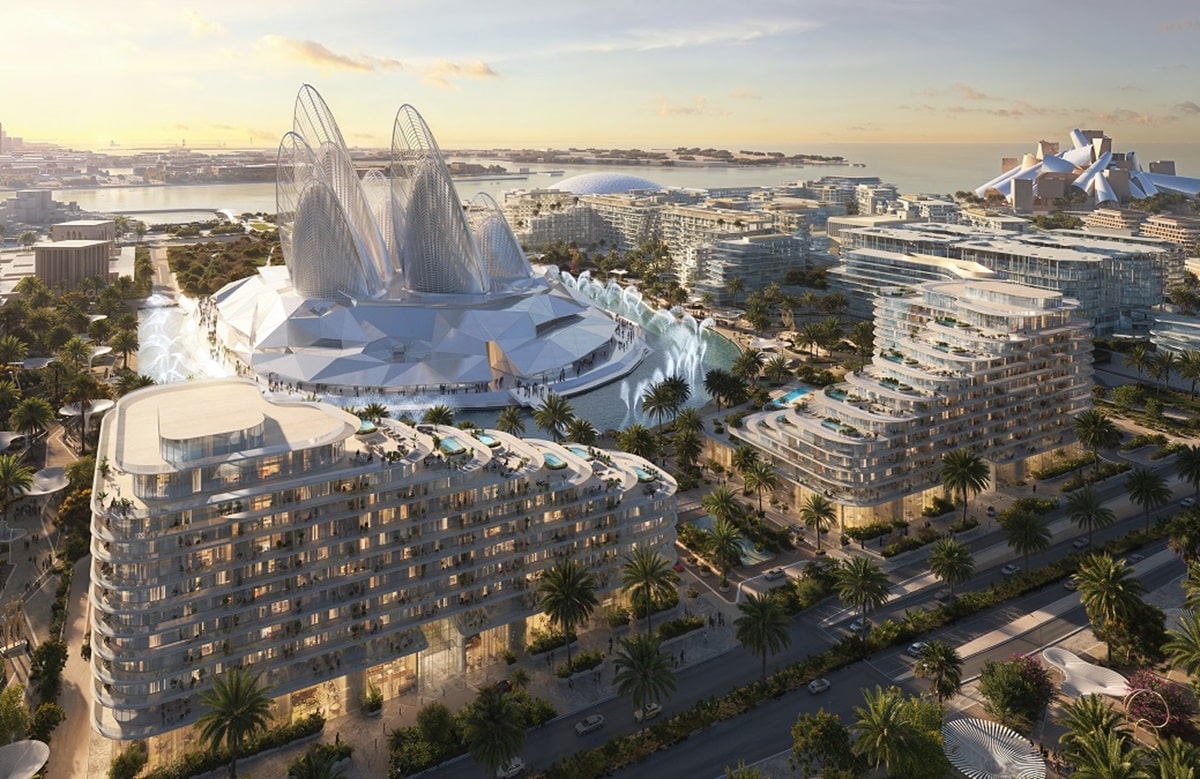
Abu Dhabi's luxury property market is entering a new phase. International hospitality groups, fashion houses and specialist lifestyle brands are increasingly partnering with developers to create residences that offer a defined identity, premium design and professionally managed living experiences.
A report published by Global Branded Residences (GBR), covered by Khaleej Times on 19 October 2026 , places Abu Dhabi sixth globally among branded residential city markets. The report identifies 31 branded residential projects in the emirate, including five completed developments and 26 planned or under development.
The significance extends beyond the number of projects. Abu Dhabi's pipeline is increasingly characterised by standalone branded residences — properties that operate independently of an adjoining hotel while retaining a brand-led residential proposition.
For investors, this raises several important questions. What does a branded residence actually offer? Is the premium justified? Could Abu Dhabi's growing pipeline create opportunities for capital appreciation and rental income? And how should buyers distinguish a genuinely differentiated property from one whose branding is doing most of the selling?
Abu Dhabi's Rise in the Global Branded Residences Market
Branded residences are homes developed in association with an established brand. Historically, many were connected to luxury hotels, allowing residents to benefit from hospitality services, concierge arrangements, property management and a recognised service standard.
The sector has evolved. Today's branded residential market includes developments associated with hotel operators, fashion houses, automotive marques, design studios and wellness brands. The proposition varies considerably between projects, but the central idea is to combine residential ownership with a recognisable brand identity and a defined lifestyle experience.
According to GBR's inaugural annual report, Abu Dhabi has 31 identified branded residential projects, of which five are completed and 26 are in the pipeline. Its pipeline ranks joint third globally alongside Cairo, behind Dubai and Miami.
These figures indicate that the capital is no longer simply a smaller alternative within the UAE's luxury property market. It is developing a distinct position of its own, supported by waterfront destinations, cultural infrastructure, premium residential communities and international demand.
What the headline figures tell us
- Abu Dhabi has an established base of completed branded residences, alongside a significantly larger development pipeline.
- Standalone projects represent the overwhelming majority of upcoming branded residential developments.
- The UAE remains the largest branded residences market in the Middle East and North Africa.
- Global demand for branded homes is attracting both hospitality companies and brands from outside the hotel industry.
- A growing pipeline creates opportunities, but it also makes project selection and competitive-supply analysis more important.
What Are Standalone Branded Residences?
One of the most important findings in the GBR report is that 92% of Abu Dhabi's upcoming branded residences are standalone developments. Globally, the equivalent figure is reported at 37%.
A standalone branded residence is not dependent on an operating hotel occupying the same site. It is designed primarily as a residential development, with the brand contributing to its design, services, identity or management proposition.
This model can appeal to buyers who want privacy and a residential environment without the activity associated with a hotel. Depending on the individual project, residents may receive concierge services, private amenities, managed facilities and other hospitality-inspired features.
The model also gives developers greater flexibility to work with non-hotel brands. A fashion house, design company or automotive marque may contribute a distinct aesthetic and positioning without operating a hotel.
Why the standalone model matters
Standalone developments can appeal to buyers who intend to use their property as a primary residence, a second home or a long-term asset. The absence of an adjoining hotel does not automatically mean that services are inferior; equally, the presence of a brand does not guarantee a particular service standard.
Buyers should establish precisely which services are contractually provided, who operates them, how the costs are funded and whether the arrangement will continue after the development is handed over.
This is particularly important for off-plan purchases, where the finished experience may be described in marketing material long before residents can assess the actual building and its operations.
The Global Branded Residence Premium: Is It Worth Paying?
One of the most striking findings in the GBR report is that branded residences command an average price premium of 44% over equivalent non-branded residential properties worldwide.
This is a reported global average, not a forecast for Abu Dhabi. It should not be interpreted as evidence that every branded property is worth 44% more than an otherwise comparable home, or that the premium will be maintained when the property is resold.
The premium can reflect a combination of brand recognition, architectural design, services, facilities, management arrangements, scarcity and buyer perception. The relative contribution of each factor differs between developments.
A branded property in a prime waterfront location may command a premium because of its location and outlook as well as its brand. Without separating those factors, it is difficult to establish how much of the additional price is genuinely attributable to the brand itself.
"A recognised brand can strengthen a property's proposition. It cannot compensate indefinitely for an inflated entry price, weak rental economics or a lack of genuine demand."
Hassan Waqar
What Actually Creates Value in a Branded Residence?
From an investment perspective, a branded residence should be evaluated as a property first and a branded product second. The brand matters, but its contribution needs to be understood in the context of the entire investment.
Which International Brands Are Entering Abu Dhabi?
Abu Dhabi's branded residences market includes a growing mix of international hospitality operators and non-hotel luxury brands. The range illustrates how the concept is expanding beyond traditional hotel-linked residential projects.
Brands identified in completed and upcoming developments in the GBR report include Mandarin Oriental, Four Seasons, St. Regis, W, Waldorf Astoria, Elie Saab, Jacob & Co., Henge, BRABUS and SHA.
Marriott is reported to have five developments in Abu Dhabi's pipeline, followed by Accor with three. At individual brand level, Mandarin Oriental and Four Seasons each have two projects, while Elie Saab leads among non-hotel brands with two upcoming projects.
These figures describe development activity, not a ranking of investment performance. The number of projects associated with a brand does not establish which development offers the strongest risk-adjusted return.
Hospitality brands
Hotel brands can bring established service systems, hospitality expertise and international customer recognition. However, the actual residential experience depends on the contractual operating arrangement, the services provided and the standard maintained after handover.
Fashion, design and lifestyle brands
Non-hotel brands can differentiate a project through architecture, interiors, materials and a particular lifestyle identity. Their appeal may be strongest among buyers who already value the brand and understand what it represents.
Investors should nevertheless examine the substance of the relationship. The depth of a brand's involvement, its continuing obligations and the rights granted to the developer can vary significantly between projects.
Questions to ask before buying
- Is the brand directly involved in design, management or service delivery?
- How long does the branding or management agreement last?
- What happens if the brand relationship ends or changes?
- Are the promised amenities and services documented in the relevant contracts?
- Does the purchase price remain competitive when compared with similar properties?
Where Should Investors Look in Abu Dhabi?
Abu Dhabi is not a single uniform residential market. Its districts appeal to different buyer profiles, and a branded development's investment potential depends partly on how well it fits the location and its likely demand base.
Saadiyat Island
Saadiyat Island is relevant to investors seeking a premium residential environment associated with waterfront living, cultural destinations and high-end hospitality. Its positioning can support a differentiated luxury proposition, but individual properties still need to be assessed against competing supply, entry prices and ongoing costs.
Al Maryah Island
Al Maryah Island offers a different investment proposition, with a business and lifestyle environment that can appeal to professionals, corporate residents and buyers seeking an urban waterfront address. For branded residences here, the relationship between residential demand, employment activity, amenities and price is particularly relevant.
Yas Island
Yas Island has an established leisure and entertainment identity, making it relevant to buyers who value lifestyle amenities and access to visitor attractions. Investors should distinguish between properties suited to owner occupation, long-term rental demand and those whose economics depend more heavily on visitor activity.
Al Reem Island
Al Reem Island provides an established residential setting with a broad range of apartment stock. Its relevance to a branded residence investment depends on how the specific development differentiates itself from the wider market and whether the purchase price is justified by its location, specifications and operating model.
These locations should not be treated as interchangeable. A waterfront address, a cultural district and a leisure-oriented community can attract different occupiers, support different rental strategies and experience different levels of competing supply.
Abu Dhabi and Dubai: Two Different Branded Residence Markets
The UAE is the largest branded residences market in the Middle East and North Africa, with 260 projects identified by GBR, including 185 in the development pipeline.
Dubai remains ahead of Abu Dhabi in the scale of branded residential development. According to the GBR findings reported by Khaleej Times, standalone developments account for 77% of Dubai's branded residential pipeline, compared with 92% in Abu Dhabi.
This distinction is important. Abu Dhabi's market is not simply reproducing Dubai's development mix. Its pipeline is more heavily weighted towards standalone projects, suggesting a different composition of upcoming supply.
Dubai's larger and more established branded residential ecosystem offers investors a broader field of existing developments and comparable properties to analyse. Abu Dhabi's expanding pipeline presents a different proposition, with opportunities to assess projects as the market develops.
Neither market is automatically the better investment. The answer depends on the individual asset, its price, expected holding period, buyer profile, rental economics and future competition.
| Investment Factor | Abu Dhabi | Dubai |
|---|---|---|
| Market position | An expanding branded residences market with 26 projects in the reported pipeline. | A more established and larger branded residences market. |
| Standalone pipeline | 92% of upcoming branded residences, according to GBR. | 77% of upcoming branded residences, according to GBR. |
| Location assessment | Examine each district's residential demand, future supply and the specific appeal of the development. | Examine established luxury districts alongside emerging locations and competing branded launches. |
| Investment priority | Determine whether the entry price reflects genuine differentiation and sustainable demand. | Determine whether the brand premium is supported by resale evidence, rental demand and scarcity. |
| Principal caution | A growing pipeline can increase competition between new projects. | An established market does not eliminate the risk of overpaying or buying into oversupplied segments. |
The Supply Question: Can 26 New Projects Absorb Demand?
A growing development pipeline is evidence of developer activity and confidence in the sector. It is not, by itself, evidence that every project will perform well.
With 26 branded residential developments planned or under development, investors need to consider the timing, scale and positioning of future supply. The impact will depend on how many units are delivered, which locations they occupy, their price points and the pace at which suitable buyers and tenants enter the market.
The relevant comparison is not simply branded residences against ordinary apartments. Investors should examine competing properties that offer similar locations, layouts, views, specifications, services and overall ownership costs.
A genuinely scarce property in a strong location may retain its appeal even as new developments enter the market. A project whose main differentiator is a brand name, however, may face greater pressure if similar homes become readily available.
Three supply indicators worth monitoring
- Delivery concentration: how many comparable units are expected to enter the same location within the investor's holding period?
- Product differentiation: do competing developments offer materially different designs, services, views or residential experiences?
- Absorption: are completed homes being occupied and resold at prices consistent with the original investment assumptions?
Rental Yields: Why the Headline Return Can Be Misleading
Branded residences can appeal to tenants who value service, convenience, privacy and a premium residential environment. Whether that translates into stronger rental income depends on the property and its market.
A higher advertised rent does not necessarily produce a higher investment return. If a branded property costs substantially more to purchase, or carries higher service charges and operating costs, its net yield may be lower than that of a comparable non-branded residence.
Investors should distinguish between gross rental yield and net operating performance.
Illustrative rental calculation
- Purchase price: AED 5,000,000.
- Illustrative annual rental income: AED 300,000.
- Gross rental yield: 6% before expenses.
- If annual service charges, management, maintenance and vacancy-related costs total AED 60,000, net income before financing and other applicable expenses would be AED 240,000.
- Net yield on the AED 5,000,000 purchase price would therefore be 4.8%, before acquisition costs, financing and any other relevant expenses.
These figures are illustrative, not market quotations or a rental forecast for any specific Abu Dhabi development. Actual income and expenses must be established for the property being considered.
Where the purchase price includes a significant brand premium, the central question is whether tenants are willing to pay enough additional rent to justify the extra capital invested and the ongoing cost of ownership.
Capital Appreciation and the Exit Strategy
Buyers sometimes assume that a recognised brand will make a property easier to resell or protect its value during a market downturn. That outcome is possible, but it should not be treated as guaranteed.
Resale performance depends on the availability of comparable properties, the size of the buyer pool, the remaining relevance of the brand, the property's condition and the price at which the original investor entered the market.
An investor who purchases at a substantial premium needs a future buyer willing to recognise and pay for that premium. If the resale market values the property primarily on its location, size and physical condition, part of the original premium may not be recovered.
This is particularly relevant when comparing off-plan launch prices with the potential resale market after completion. Launch incentives, payment plans and marketing campaigns can make headline prices difficult to compare directly.
Before buying, investors should establish a realistic exit strategy: the likely future buyer, the holding period, the anticipated competing supply and the resale price required to achieve the intended return.
Should You Buy a Branded Residence Off-Plan?
An off-plan branded residence can offer access to a new development before completion, sometimes with staged payments and the opportunity to select a preferred unit. It also exposes the buyer to construction, delivery, market and operating risks.
The brand association and finished lifestyle are often presented before the completed building can be inspected. That makes contractual due diligence particularly important.
Buyers should review the purchase agreement, payment milestones, completion provisions, specifications, service-charge arrangements and the contractual status of the brand relationship. The relevant project registration, escrow arrangements and applicable regulatory requirements should also be independently verified.
The investment case should remain defensible if prices rise more slowly than expected, rental income falls below the original forecast or completion takes longer than anticipated.
I would not buy a property simply because a recognised brand is attached to it. I would first establish whether the location, price, product and expected demand justify the investment. The branding should strengthen that case, not replace it.
My Investment Perspective
Abu Dhabi's growing branded residences pipeline is a meaningful development for the capital's luxury property market. It reflects increasing participation from international brands and developers seeking to serve buyers who value more than the physical property.
The high proportion of standalone projects is particularly noteworthy. It indicates that the market's expansion is not confined to residences attached to hotels; it also includes projects designed around a dedicated residential experience.
But the number of launches should not be confused with the number of attractive investments. As the market expands, differences in location, execution, management, supply and pricing will become increasingly important.
The reported global 44% price premium is useful as an indicator of how buyers value branded residences internationally. It is not a valuation benchmark that should automatically be applied to Abu Dhabi.
Investors should instead establish the premium for each individual property by comparing it with suitable alternatives and testing whether the additional price can be supported by real demand, rental economics and a credible exit strategy.
"The strongest investment is not necessarily the property with the most recognisable name. It is the property where location, product quality, demand and entry price work together."
Hassan Waqar
The Investment Takeaway
Abu Dhabi's position among the world's leading branded residence markets deserves attention. The 26-project pipeline, the prevalence of standalone developments and the participation of international brands indicate a market that is expanding in both scale and variety.
For investors, this creates a broader selection of properties to evaluate. It also increases the importance of distinguishing genuine differentiation from branding that is already reflected heavily in the asking price.
A disciplined assessment should begin with location, comparable pricing, expected demand, future supply and net ownership economics. It should then examine the brand agreement, management arrangements and potential resale market.
The opportunity is not to assume that every branded residence will appreciate. It is to identify properties where the brand adds demonstrable value without requiring the investor to overpay for the privilege.
Abu Dhabi Branded Residences: Investor Summary
| Factor | Market Evidence | Investment Implication |
|---|---|---|
| Global position | Abu Dhabi ranks sixth globally among branded residential city markets in the reported GBR findings. | The sector merits consideration as part of the emirate's developing luxury residential market. |
| Development pipeline | 26 projects are planned or under development. | Examine future competing supply and delivery timing. |
| Standalone projects | 92% of upcoming branded residences are standalone. | Assess the residential operating model, services and long-term management arrangements. |
| Global price premium | GBR reports a 44% average premium worldwide. | Do not apply the global average automatically to individual Abu Dhabi properties. |
| Brand participation | Hospitality and non-hotel luxury brands are represented in the development pipeline. | Establish the actual scope and duration of each brand's involvement. |
| Rental performance | Outcomes depend on the specific property, costs and tenant demand. | Calculate net yield rather than relying on advertised rent or gross yield. |
| Resale potential | The market's future performance will depend on demand, supply and pricing. | Test the exit strategy against comparable properties and realistic future buyer demand. |
FAQs: Abu Dhabi Branded Residences
How many branded residences are in Abu Dhabi's pipeline?
Global Branded Residences identified 31 branded residential projects in Abu Dhabi, including five completed developments and 26 planned or under development, according to its inaugural annual report reported by Khaleej Times in October 2026.
What is Abu Dhabi's global ranking for branded residences?
The GBR findings reported by Khaleej Times place Abu Dhabi sixth globally among branded residential city markets. Its development pipeline ranks joint third alongside Cairo, behind Dubai and Miami.
What is a standalone branded residence?
It is a branded residential development that does not depend on an operating hotel on the same site. It may still provide dedicated residential management, concierge services and premium amenities, depending on its contractual arrangements.
Why are standalone branded residences becoming more common?
They allow developers to create residential experiences around design, services and brand identity without requiring an adjoining hotel. Their suitability depends on the intended buyer, the development's operating model and the strength of demand.
Do branded residences command higher prices?
GBR reports an average global price premium of 44% compared with equivalent non-branded residential properties. This is a worldwide average, not a guaranteed premium for Abu Dhabi or an indication that every branded property is fairly priced.
Which brands are active in Abu Dhabi's branded residence market?
Brands identified in completed and upcoming developments include Mandarin Oriental, Four Seasons, St. Regis, W, Waldorf Astoria, Elie Saab, Jacob & Co., Henge, BRABUS and SHA. Their involvement and contractual responsibilities vary by development.
Are branded residences better investments than ordinary apartments?
Not automatically. A branded property may offer stronger differentiation or appeal to a specific buyer or tenant audience, but the additional purchase price and operating costs can reduce its overall return. Compare net yield, pricing, supply and resale liquidity before deciding.
Which Abu Dhabi locations should investors consider?
Saadiyat Island, Al Maryah Island, Yas Island and Al Reem Island offer different residential propositions. The appropriate location depends on the individual development, its pricing, target tenant or buyer, competing supply and the investor's intended holding period.
Should I buy a branded residence off-plan?
An off-plan purchase may provide access to a new development, but it also carries delivery, construction, market and contractual risks. Review the purchase agreement, project registration, payment arrangements, specifications, brand agreement and expected ownership costs before committing.
Does the growth in branded residences guarantee capital appreciation?
No. Capital appreciation depends on the entry price, future demand, competing supply, property quality and resale liquidity. The growth of the overall sector does not guarantee that every development or unit will appreciate.
Considering a Branded Residence in the UAE?
The right investment depends on more than the brand name. I help investors assess location, pricing, rental economics, future supply and exit options to determine whether a property fits their wider investment objectives.
Khaleej Times — Abu Dhabi ranks sixth globally for branded residences as 26 new projects enter pipeline, 19 October 2026.
Global Branded Residences — The Brand Standard, inaugural annual report, as summarised in the Khaleej Times article.
Knight Frank — The Wealth Report 2026, cited in the original reporting for global wealth and luxury residential trends.
The statistics in this article are attributed to the published industry findings referenced above. Market rankings, project pipelines and price premiums may change. Global averages should not be interpreted as forecasts for individual UAE developments.